
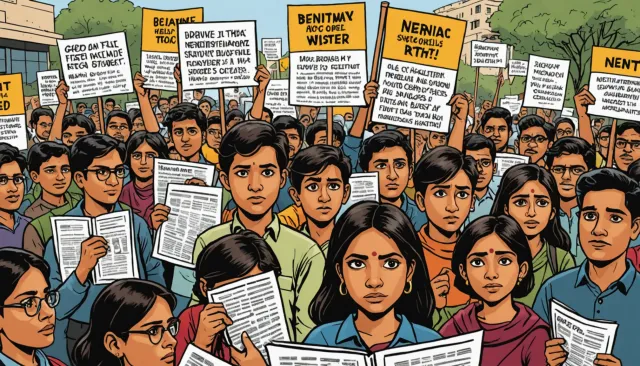
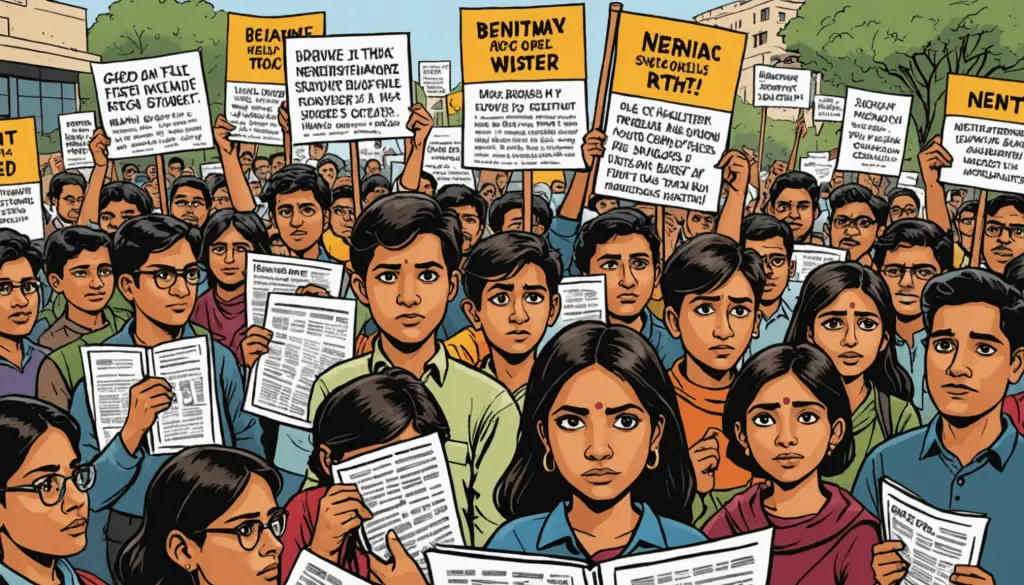
Reels and stories documenting student protests in Delhi are being marked "sensitive" on Instagram, according to a wave of user reports emerging this week. The pattern has affected prominent accounts, including one belonging to the Citizens for Justice and Peace (CJP) and content shared by activist Anish Gawande, with some users describing the "See reel" function as broken outright.
What makes this notable is not a single flagged post but the apparent breadth and consistency of the restriction. Multiple independent creators say their reach has dropped sharply and without explanation - a phenomenon widely, if informally, known as shadowbanning. When a platform this dominant in India's information ecosystem quietly throttles visibility around a live political event, the effect is functionally similar to censorship, whether or not that is the intent. buy vpn
Why Protest Footage Sits at the Core of Free Expression
Documentation of public protest is not incidental speech - it is among the most protected categories of political expression under Article 19(1)(a) of the Constitution, which guarantees freedom of speech and expression to Indian citizens. Courts have repeatedly recognised that the right to receive information is inseparable from the right to impart it. When platforms suppress protest content at scale, the harm is twofold: creators lose the ability to speak, and the public loses the ability to witness events as they unfold in real time.
Social platforms operate their own "Community Standards," a set of privately drafted rules that determine what content is allowed, restricted, or demoted. These policies are not law, but because platforms like Instagram function as de facto public squares for millions of Indians, decisions made under those private rules carry public consequences that resemble state censorship even when no government order exists.
The Opacity Problem: Sensitive Labels, Shadowbans, and Legal Pressure
Instagram's "sensitive content" screens were originally designed to shield users from graphic violence, nudity, or self-harm imagery - not footage of peaceful demonstrations. When ordinary protest visuals trigger the same interstitial warning, it raises a legitimate question: is this a flaw in automated content classification, a deliberate policy choice, or the result of a legal demand from an external authority?
India's IT Act allows government bodies to issue takedown or restriction notices to platforms, and mechanisms such as the Sahyog Portal have been used to route government requests to intermediaries. Without transparency, users cannot distinguish between an algorithmic misfire and content suppressed at official request. That distinction matters enormously, because each carries different legal and accountability implications - one is a technical failure to fix, the other a matter of public record that citizens have a right to know about.
What Accountability Should Look Like
Meta has not publicly clarified whether Delhi protest-related accounts face reduced distribution, which specific policy provision is being applied, or whether any restriction stems from a government request. Affected users also lack clarity on appeal routes.
- Disclosure of whether protest-related accounts face algorithmic demotion or feature limits
- Identification of the exact Community Standard invoked for "sensitive" labelling
- Confirmation of whether restrictions follow government legal process, including IT Act notices
- A clear, accessible appeal mechanism for wrongly restricted content
Until such transparency exists, the presumption must favour restoring content that does not demonstrably violate stated policy - because the cost of silent, unexplained suppression falls not just on individual creators, but on the public's ability to see and understand events unfolding in its own capital.
